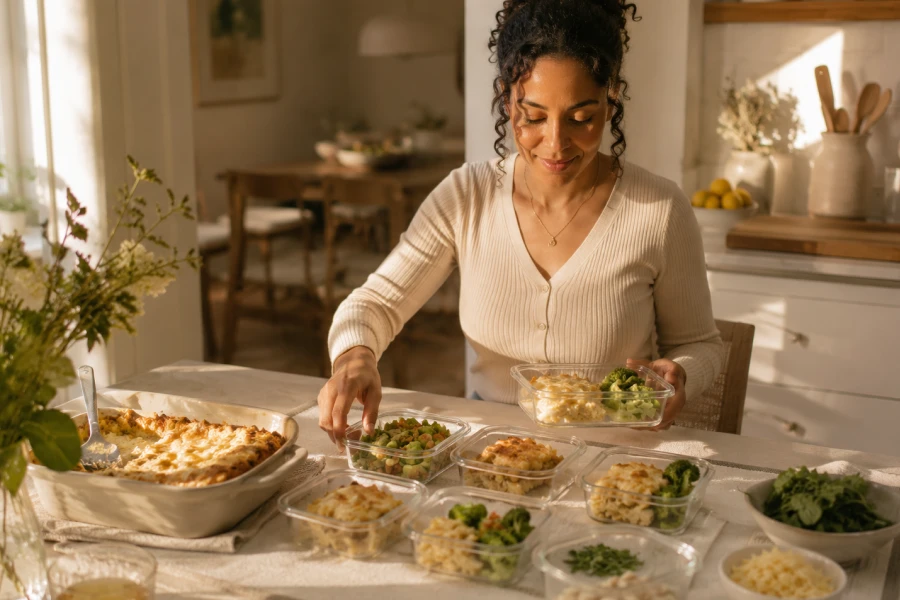
Tuesday dinner often feels harder than it should. A full day leaves little room for recipe hunting. Monthly casserole meal planning gives those evenings a dependable shape. It replaces frantic choices with a short, familiar rhythm. Families still get variety without starting from zero. A casserole can use sturdy pantry basics and fresh produce. It can also welcome leftovers with very little fuss. The secret is not cooking the same meal repeatedly. The secret is creating choices before hunger arrives. That small change makes the kitchen feel far more generous.
Busy households need dinner systems that accept real life. School nights, appointments, and late meetings rarely follow a neat schedule. A rotation offers flexibility without abandoning structure. You can choose a meatless bake after a heavier weekend. You can choose a comforting pasta bake after a rainy afternoon. One dependable cozy family dinner rhythm keeps those decisions calm. It also makes shared meals easier to anticipate. Children learn what types of dinners may appear. Adults stop carrying every decision alone. Everyone gains a little more breathing room.
Begin with a few building blocks your household already enjoys. Choose a grain, starch, or vegetable base first. Then add proteins that cook well in batches. Keep sauces simple enough to change with spices. A creamy base can become herb-forward or warmly spiced. Tomato sauces can shift from bright to smoky. That is why a four-week dinner framework feels useful rather than restrictive. It provides a repeatable order, not rigid recipes. Familiarity speeds up planning. Small variations keep dinner from becoming predictable.
Shopping becomes easier when ingredients can serve more than one meal. Buy spinach for a pasta bake and breakfast eggs. Roast extra vegetables for grain bowls or lunches. Select proteins that divide into separate portions. Keep a few shelf-stable toppings ready for texture. Frozen vegetables can rescue weeks with little shopping time. A thoughtful grocery-smart dinner routine reduces forgotten produce and duplicate purchases. It also helps you use what is already available. Less waste feels good financially and practically. Better choices begin before the cart is full.
Seasonal produce gives a casserole rotation a natural sense of movement. Spring can bring peas, herbs, and tender greens. Summer works well with zucchini, tomatoes, and fresh corn. Autumn invites squash, mushrooms, and deeper spice blends. Winter welcomes roots, greens, and slow-cooked sauces. Each season makes a familiar format feel newly appealing. Try planning around weekly casserole themes instead of chasing entirely new recipes. One theme might spotlight citrus and herbs. Another may lean into roasted vegetables. The result feels connected to the time of year.
Flexibility matters more than perfection in any family meal routine. A planned chicken bake can become a bean bake easily. A pasta dish can become a rice dish. Leftover roasted vegetables can replace a fresh side. One skipped dinner does not undo the month. Simply move the meal to another night. The strongest plans leave room for takeout and surprise invitations. They also leave room for changing appetites. A rotation works because it bends with the household. That makes consistency feel realistic instead of demanding.
Preparation does not need to consume a whole Sunday. Wash vegetables while the oven warms for something else. Cook one protein in a larger quantity. Grate cheese and portion toppings at the same time. Label a few containers for the coming days. Keep one ready-to-assemble meal near the front of the refrigerator. A simple prep window protects tired evenings from extra work. It also keeps ingredients visible before they spoil. Short sessions are easier to repeat. Repetition creates confidence. Confidence turns dinner planning into a habit.
Some weeks deserve easier standards, not more ambitious menus. That is when a warm, familiar bake matters most. Keep one forgiving recipe for especially busy nights. Use prepared ingredients when time is scarce. Serve a simple salad or fruit beside it. Ask family members which combinations they want repeated. Their answers make the plan more personal. A useful rotation becomes part of household memory. It gives everyone a dependable place to land. Over time, dinner feels less like a task. It feels like a steady, shared ritual.




Leave a comment