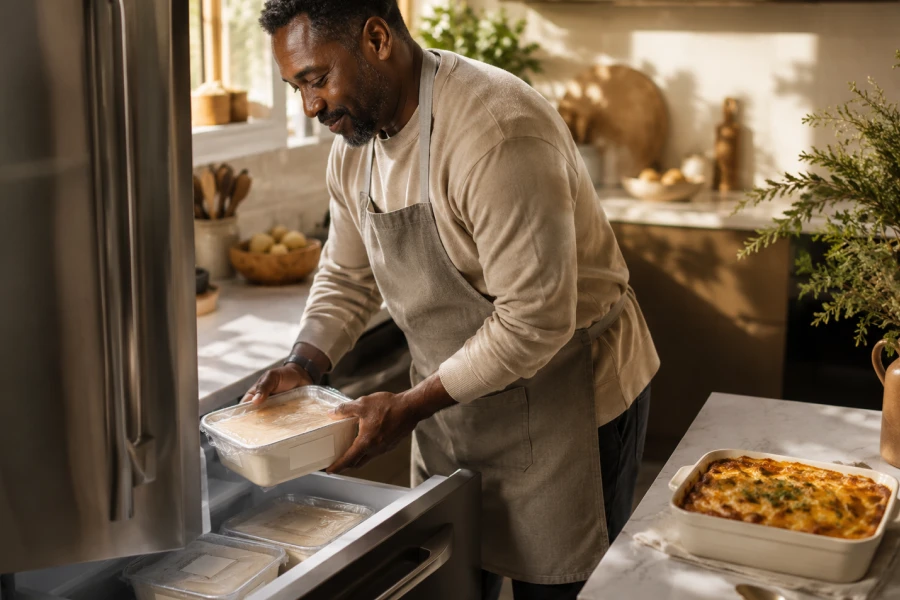
There is real relief in knowing dinner already has a place. A freezer-friendly casserole rotation creates that relief before busy weeks begin. It gives you a few dependable meals without filling every shelf. The system works best when meals are easy to label and reheat. It also works when flavors remain varied. One tray can become dinner after a long day. Another can help when company arrives unexpectedly. The freezer stops being a mystery zone. It becomes a quiet source of support. That kind of preparation feels especially valuable during hectic seasons.
Freezer meals offer more than convenience. They create a buffer between a difficult day and another expensive decision. You can choose something ready without settling for food that feels uninspired. A well-planned rotation also protects fresh ingredients from going unused. Cook once, then enjoy the benefit later. A reliable freezer dinner strategy helps you see the freezer as part of meal planning. It encourages intentional portions and clear labels. It can also reduce the urge to order dinner impulsively. The gain is practical, financial, and deeply reassuring.
Some casseroles hold their texture better than others. Choose recipes with sauces that reheat smoothly. Select vegetables that stay pleasant after baking. Add delicate toppings later when possible. Keep pasta slightly firm before freezing. Use sturdy grains when you want longer storage. Test one recipe before making several portions. A successful first attempt gives useful information. You will learn how quickly your household eats it. You will also learn which details matter most. Good freezer cooking improves through small, practical adjustments.
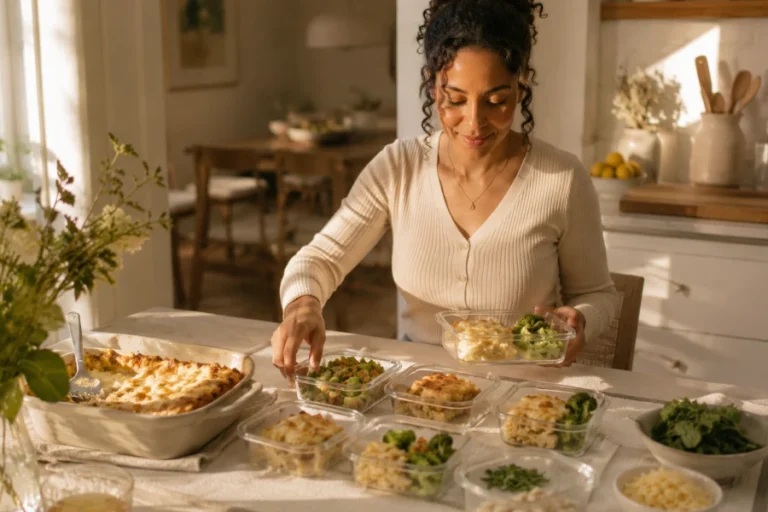
Clear packaging turns frozen food into a real plan. Use containers sized for your household whenever possible. Label each meal with the date and basic reheating direction. Keep older meals where you can see them first. Divide larger bakes into smaller portions for flexibility. Leave enough space for food to expand. A neat freezer lowers the risk of forgotten dinners. It also makes a rushed choice easier. Order creates trust in the system. Trust makes the routine more likely to continue.
Choose one recurring time to prepare a few components. Chop vegetables while another meal is already cooking. Make a double batch of sauce when the pot is out. Use leftover roasted protein in a second dish. Assemble one meal for now and one later. That rhythm forms a useful batch-prep casserole routine without turning the kitchen into a project. Short, repeated sessions usually beat rare marathon sessions. You gain momentum without exhausting yourself. The freezer fills slowly but reliably. That is often the most sustainable approach.
Frozen meals do not need to feel disconnected from the season. Prepare lighter combinations when produce is abundant. Make heartier dishes when colder weather approaches. Add fresh herbs or bright toppings after reheating. Keep a few sauces ready for last-minute updates. Use seasonal cheeses and spices to shift familiar bases. A planned rotation can hold both comfort and freshness. It can also make seasonal ingredients last beyond one week. That helps reduce the pressure to cook every item immediately. A flexible freezer supports the season instead of fighting it.
Ingredient swaps make a rotation more resilient. Replace one vegetable with another that has a similar texture. Use beans when meat is not available. Try a different grain when the pantry changes. Add a crunchy topping only at the end. Keep sauces versatile enough for several directions. Thoughtful casserole ingredient swap ideas keep planning from becoming fragile. You do not need to abandon a meal because one item is missing. Instead, you adapt with confidence. That skill makes every dinner system more forgiving.
Leftovers become easier to appreciate when they have a destination. Freeze a portion before the meal reaches the table. Set aside extra vegetables for another bake. Turn a small amount of protein into a future filling. Keep notes about portions that disappeared quickly. Those notes help you prepare better quantities next time. A practical comfort food meal system makes every extra serving feel intentional. It prevents good food from becoming an afterthought. The freezer becomes part of the meal, not just storage. That shift can make a demanding week feel much more manageable.



Leave a comment